
Welding has always been about heat: melt two edges, let them fuse, and allow them to cool into a single piece. Traditional methods do this with an electric arc or a flame, which spreads heat widely around the joint. Laser welding does the same job with a focused beam of light, and that single difference changes almost everything about the result. The weld is narrower, the surrounding metal stays cooler, and the joint is stronger and cleaner. Understanding how the process works helps explain why more workshops are turning to a laser welding machine manufacturer for their joining work.
The Focused Beam
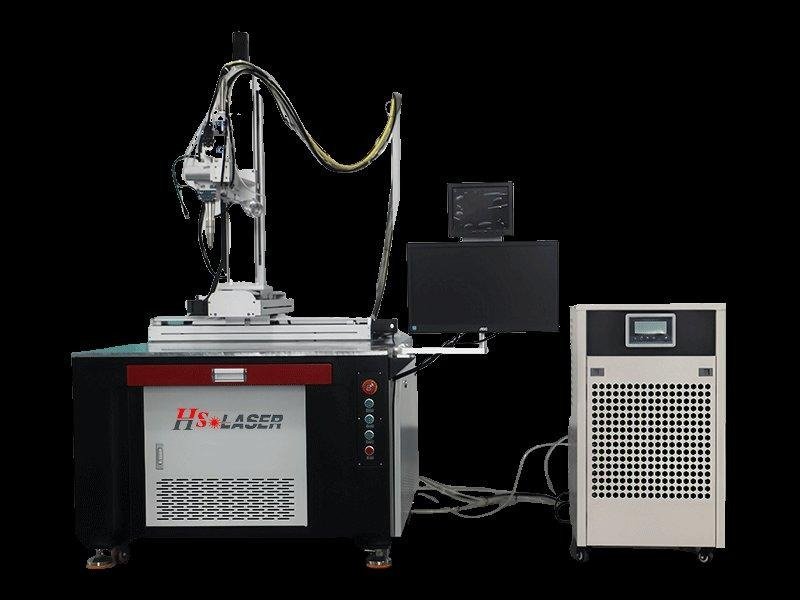
A laser welding machine focuses a beam of light onto the joint between two parts. The energy is so concentrated that the metal at the focal point melts almost instantly, forming a small pool of molten metal. As the beam moves along the joint, the pool follows it, and the metal behind it cools and solidifies into a weld. Because the beam is narrow, the weld itself is narrow, often less than a millimetre wide, and the heat-affected zone around it is small. That means less distortion, less weakening of the surrounding metal and a joint that looks neat without grinding or finishing. A laser welding machine manufacturer designs the whole system around keeping that beam stable and precisely positioned.
Two Ways the Beam Works
Laser welding operates in two main modes. In conduction welding, the beam heats the surface and the heat spreads into the metal by conduction, producing a shallow, wide weld. This suits thin materials and delicate parts, where control matters more than depth. In keyhole welding, the beam is intense enough to vaporise a narrow channel, or keyhole, deep into the metal. The molten metal flows around the keyhole and solidifies behind it, producing a deep, narrow weld in a single pass. Keyhole welding joins thick sections quickly and is used for structural parts, battery housings and automotive components. A good laser welding machine manufacturer will explain which mode suits your materials and thicknesses, because choosing the wrong one is a common cause of poor results.
Speed, Accuracy and Automation
Laser welding is fast. The beam moves quickly along the joint, and because the weld needs little finishing, the total time per part is often far lower than with arc welding. The process is also highly repeatable: once the settings are correct, the machine produces the same weld thousands of times. That repeatability makes laser welding easy to automate. Robots and gantry systems carry the welding head along programmed paths, working through the night if needed, while sensors monitor the weld and adjust the settings in real time. For a workshop producing large volumes of identical parts, that combination of speed and consistency is difficult to beat.
Materials and Joint Types
Laser welding works on a wide range of metals, including steel, stainless steel, aluminium, copper and titanium. It handles thin foils and thick plate, and it can join dissimilar metals that are difficult to weld by other methods. The process suits butt joints, lap joints and fillet joints, and it works on parts of many shapes, from flat sheet to cylindrical components held in a rotary fixture. Thin materials benefit most, since the small heat-affected zone prevents the warping that arc welding often causes. A laser welding machine manufacturer with broad experience can advise on joint design, because a joint prepared for laser welding often differs slightly from one prepared for arc welding.
Where the Technology Fits Best
Laser welding earns its place wherever precision and appearance matter. It joins battery cells and tabs in electric vehicles, seals medical devices, welds jewellery, assembles sensors and builds automotive body parts. In each case the narrow weld and low distortion are the deciding factors. It is less suited to very rough, dirty or poorly fitting joints, since the beam needs a clean, well-aligned seam. Preparation matters: parts must fit together closely and be free of heavy oil or oxide before welding begins.
See also: N₂O vs CO₂ in Culinary Systems: A Technical Comparison from a Kitchen “Open-Source” Perspective
5 Advantages of Laser Welding
- Narrow welds: a small heat-affected zone means less distortion.
- High speed: fast travel along the joint with little finishing needed.
- Repeatability: the same weld, thousands of times, with minimal variation.
- Automation: easy to integrate with robots and production lines.
- Clean finish: neat joints that often need no grinding.
Getting Started with Laser Welding
If you are new to laser welding, the best first step is a demonstration on your own parts. A good laser welding machine manufacturer will weld your samples, explain the settings and discuss the results with you honestly. From there, training builds your team’s confidence, starting with simple joints and moving to more demanding work. Keep notes on the settings that work for each material, and do not rush into production volumes until the process is proven. The learning curve is shorter than most people expect.
Frequently Asked Questions
Is laser welding stronger than arc welding?
A well-made laser weld is as strong as the base metal, and the narrow heat-affected zone often leaves the surrounding metal stronger than after arc welding.
Can laser welding join thin materials?
Yes. Thin foils and sheet are among the best applications, since the focused beam and low heat input prevent warping.
Does laser welding need filler material?
Often no. Many laser welds are made without filler, which keeps the process simple. Filler wire can be added when the joint needs it.
Final Thoughts
Laser welding replaces a broad, hot arc with a narrow, precise beam, and the results speak for themselves: strong joints, minimal distortion and a clean finish. Once you understand the focused beam, the two welding modes and the importance of joint preparation, the technology makes sense. Talk to a laser welding machine manufacturer, test the process on your own parts, and judge the welds for yourself. Talk to a laser welding machine manufacturer before you buy, and ask the laser welding machine manufacturer to weld your own parts: a good laser welding machine manufacturer will show you the results honestly. Your laser welding machine manufacturer can help you work through the numbers for your own parts.