
Upgrading manufacturing equipment can create opportunities to improve quality, simplify production, and accommodate new product requirements. However, a successful upgrade requires more than replacing an older machine with a newer model.
Manufacturers need to identify the limitations of their current process, define the required improvements, and confirm that the new equipment will work with existing materials, workflows, and facilities.
Laser equipment can support several manufacturing applications, but the best upgrade is the one that addresses a specific operational requirement.
Identify the Limitations of the Current Process
The planning process should begin with an assessment of existing performance. Managers can review production records, defect reports, maintenance history, labor requirements, and delivery delays.
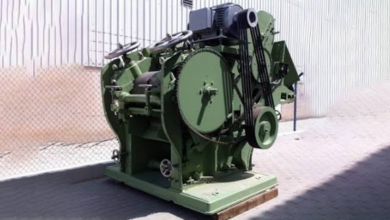
For example, a company may find that a current process produces acceptable results but requires extensive finishing. Another facility may experience downtime because replacement parts are difficult to obtain or because the equipment cannot handle a new material.
These findings help define the actual problem. Without a clear baseline, it becomes difficult to determine whether an upgrade will provide sufficient value.
Define the Required Capabilities
The next step is to specify what the replacement system must accomplish. Requirements may include material compatibility, processing range, dimensional accuracy, cycle time, work area, and production volume.
Manufacturers should distinguish essential requirements from desirable features. This helps prevent the selection process from becoming focused on specifications that do not materially improve the workflow.
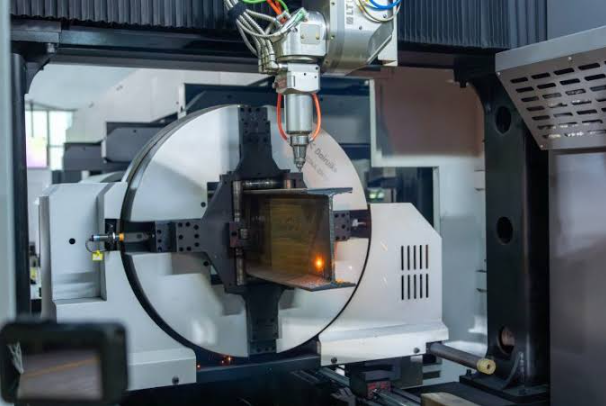
When considering industrial laser solutions, businesses should review the manufacturer’s technical documentation and determine whether the equipment suits their specific cutting, welding, marking, or other processing requirements.
The assessment should also account for future product changes, where these can be reasonably anticipated.
Test the Equipment With Representative Materials
Supplier demonstrations can be useful, but the most meaningful tests involve samples that reflect real production conditions.
Manufacturers should define acceptance criteria before the trial. Depending on the application, these may include cut quality, weld integrity, dimensional accuracy, marking legibility, cycle time, and finishing requirements.
The trial should also examine repeatability across multiple samples. One successful demonstration does not necessarily prove that the system will perform consistently during routine production.
Test results should be documented so that competing machines can be compared using the same criteria.
Check Facility and Integration Requirements
An equipment upgrade may require changes to the production area. Electrical supply, cooling, ventilation, extraction, floor space, material movement, and network connectivity should all be reviewed.
If the machine will operate alongside existing automation, the team should confirm compatibility between control systems and communication interfaces.
Safety arrangements must also be incorporated into the layout. Protective enclosures, restricted access, interlocks, and emergency procedures should be assessed before installation.
Identifying these requirements early can prevent unexpected costs and schedule changes.
Plan the Transition Carefully
Replacing production equipment may temporarily affect output. A transition plan should establish the installation schedule, staff responsibilities, training requirements, testing period, and process for returning the line to normal operation.
Where possible, the business should arrange material supply and production schedules to reduce disruption during commissioning.
Operators and maintenance personnel need training before the equipment is placed into routine service. Documentation should include approved operating procedures, inspection criteria, and instructions for reporting faults.
Evaluate the Total Cost of Ownership
The purchase price is only one element of the financial decision. Installation, training, consumables, maintenance, spare parts, energy use, and production downtime may all contribute to the total cost.
The business should compare these expenses with realistic estimates of productivity improvements, reduced rework, and other operational benefits.
Financial assumptions should be tested against different production volumes and operating conditions. This helps decision-makers understand whether the upgrade remains worthwhile if demand changes.
Establish Performance Targets
After commissioning, the manufacturer should compare actual results with the original baseline. Relevant indicators may include machine availability, processing time, first-pass acceptance, material waste, and maintenance frequency.
Performance should be reviewed after the team has gained sufficient operating experience. Initial results may be affected by training and process adjustment.
If the system does not meet expectations, the team should investigate the cause and work with the supplier to address verified issues.
Maintain the Equipment for Long-Term Performance
Routine inspection and maintenance help protect equipment reliability. The manufacturer should follow the supplier’s service schedule and keep records of repairs, component replacements, and operating issues.
Staff should understand which maintenance tasks they can perform safely and which require authorized technicians.
Maintaining accurate documentation also supports warranty claims and helps the business plan future upgrades.
Conclusion
A successful laser equipment upgrade begins with a clear understanding of current limitations and the capabilities required for future production.
By testing equipment against representative materials, planning integration, training staff, and calculating total ownership costs, manufacturers can reduce uncertainty and make a more informed investment decision.