
Every hour spent wrapping boxes by hand is an hour not spent making, selling or improving a product. For a growing business, that trade-off becomes harder to ignore as orders rise. A cellophane overwrapping machine takes one of the most repetitive jobs in the workshop and makes it faster, steadier and less tiring. This guide looks at how automation in overwrapping saves time and labour, and where the savings actually come from.
The Hidden Cost of Hand Wrapping
Hand wrapping feels cheap because it needs no equipment. The costs are hidden in the hours it takes and the quality it produces. An operator wrapping by hand may manage a reasonable pace for an hour, but hands tire, concentration slips and the pace falls. The last boxes of the day take longer and look worse than the first, and rejects pile up: torn film, crooked folds, seals that come apart.
There is also the cost of training. A new worker needs days to learn to wrap neatly and weeks to reach a steady pace. If that worker leaves, the business starts again. A cellophane overwrapping machine removes most of that learning curve, because the machine does the folding and sealing, and the operator only needs to learn to feed it and check the packs.
What Automation Changes on the Line
The biggest change is consistency. A cellophane overwrapping machine repeats the same sequence on every box: the same film length, folds and seal. The first box of the day looks like the last, and the customer receives the same quality each time. That consistency is hard to achieve by hand, and it is one of the first things a buyer notices when comparing a machine-wrapped pack with a hand-wrapped one.
The second change is pace. A semi-automatic machine wraps steadily all day, without the afternoon slowdown. A fully automatic model goes further, taking boxes from a conveyor and wrapping them without an operator at all. Either way, wrapping finishes in a predictable time, and the rest of the day can be planned around it.
Where the Labour Savings Come From
The most obvious saving is the number of people needed. A job that took two people wrapping by hand can often be done by one person feeding a machine. That person can also stack the finished packs and prepare the next batch, because feeding a machine leaves time between boxes. The labour saved can then go to work that grows the business: making the product, talking to customers, or developing the next item in the range.
There are quieter savings too. A cellophane overwrapping machine uses film more efficiently, because it cuts each sheet to the same size, while hand wrapping wastes film on uneven cuts. It produces fewer rejects, which means less wasted film and product. It also reduces strain on workers, since feeding a machine is far less tiring than folding and sealing for hours, which means fewer breaks and fewer mistakes.
Semi-Automatic or Fully Automatic?
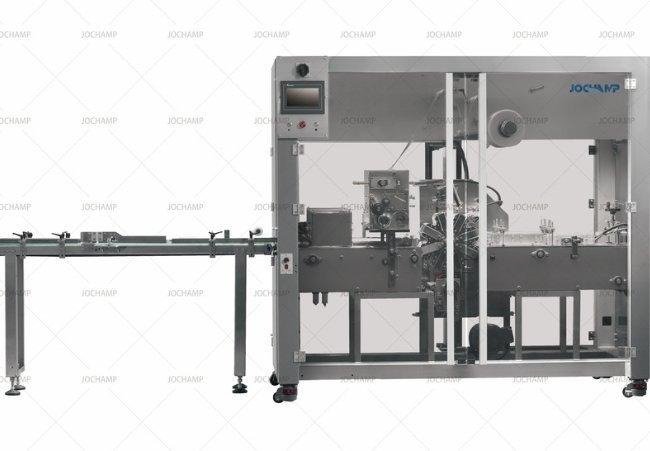
For most growing businesses, a semi-automatic cellophane overwrapping machine is the right step. The operator feeds one box at a time, the machine does the wrapping, and the pace suits a workshop wrapping hundreds rather than thousands of boxes a day. It is affordable, fits on a bench, and can be running within an hour.
A fully automatic cellophane overwrapping machine suits a business with higher volumes and longer runs. It takes boxes from a conveyor, wraps them without an operator, and sends them on to labelling or packing. It costs more and needs more space, but wraps far more boxes per hour and frees the operator entirely. The choice depends on volume: if the semi-automatic machine runs all day and still cannot keep up, it is time to look at a fully automatic model.
5 Ways Automation Saves Time
- Steady pace: the machine wraps at the same speed from the first box to the last.
- Fewer people: one operator can feed the machine and stack finished packs.
- Less waste: each sheet of film is cut to the same size, with fewer rejects.
- Faster training: feeding a machine takes hours to learn, not weeks.
- Predictable days: wrapping finishes on schedule, so the rest of the work can be planned.
See also: The Future of FBI Watch List Screening Technology
Planning the Move to Automation
Moving to a machine is easier when it is planned. Start by measuring your current wrapping: boxes per day, time taken, and rejects. Those numbers show what the machine needs to beat and make the decision clear. Then talk to a supplier and test the cellophane overwrapping machine with your own boxes, so you can see the finish and the pace for yourself.
Train one operator first, and let them become confident before anyone else uses it. Keep the hand wrapping materials for very short runs, since a machine is not always quicker for a dozen boxes. And keep notes on the settings for each product, so every run starts well. A little planning turns the move to automation into a straightforward upgrade.
Frequently Asked Questions
Will automation make my wrapping look less personal?
No. Machine wrapping looks neater and more consistent than hand wrapping, and customers see a professional finish, not a lack of care. The personal touch is in the product, not the folds.
How quickly will a machine pay for itself?
It depends on your volumes and labour costs, but a busy workshop often recovers the cost of a cellophane overwrapping machine within a year or two through saved hours and reduced waste. Calculate your current wrapping hours and compare them with the machine’s pace.
Can I automate gradually?
Yes. Many businesses start with a semi-automatic cellophane overwrapping machine and move to a fully automatic line later, once volumes grow. The semi-automatic model is a practical first step.
Final Thoughts
A cellophane overwrapping machine does not just wrap boxes faster. It makes the work steadier, the packs more consistent, the film go further and the working day more predictable. For a growing business, that is time and labour spent where it matters: on the product and the customer, not folding film. If wrapping is eating hours your business needs elsewhere, automation is worth a serious look.