
Ground reinforcement projects depend on many connected activities. Engineers must assess site conditions, contractors must prepare equipment and materials, and installation teams must follow the approved method. If these activities are poorly coordinated, even a technically suitable reinforcement system can become difficult or expensive to install.
Better installation planning helps project teams manage uncertainty, allocate resources efficiently, and maintain consistent quality. The objective is not merely to speed up individual tasks but to make the entire process safer and more predictable.
Begin With Reliable Project Information
Planning should start with the available geotechnical investigation, structural drawings, project specifications, and site constraints. These documents help the team understand the type of ground involved and the purpose of the proposed reinforcement.
The information should be reviewed before equipment and materials are ordered. If there are gaps in the site investigation, engineers should decide whether additional information is needed.
Ground conditions may change across a project. A drilling method that works well in one area may perform differently in another because of changes in rock quality, soil density, or groundwater.
Identifying these possibilities early allows the contractor to prepare suitable equipment and establish a process for reporting unexpected conditions.
Coordinate Design and Construction
The design team defines the required performance, while the construction team understands the practical challenges of installing the system. Both perspectives are important.
Before work begins, the teams should review anchor positions, lengths, angles, access requirements, installation sequence, and inspection criteria. Potential conflicts with utilities, existing structures, or other construction activities should also be identified.
A clear method statement helps translate the design into a practical sequence. It should define responsibilities, required materials, equipment, safety controls, and the records that must be maintained.
Where changes become necessary, the team should obtain technical approval before altering the approved procedure.
Choose Equipment That Matches the Site
Equipment selection can influence drilling progress, installation accuracy, and the amount of handling required. The appropriate choice depends on the ground, access, anchor specifications, and available working space.
Self-drilling systems may be useful in selected applications where conventional drilling methods struggle to maintain an open borehole. Their suitability must still be assessed against the project’s technical requirements.
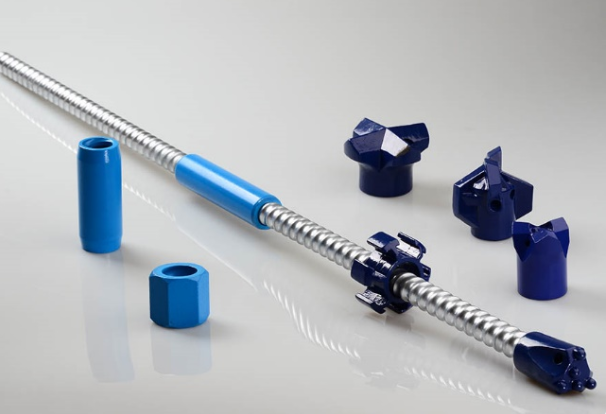
A self drilling rock anchor may be considered when comparing anchoring approaches for particular ground reinforcement tasks. Project teams should review the system’s technical documentation, compatibility with grout and accessories, load requirements, and durability provisions before making a selection.
Choosing equipment solely because it is available can create problems if its capacity or configuration is unsuitable. A short technical review can help prevent avoidable delays.
Organize Materials and Deliveries
Material shortages can interrupt installation and leave equipment or labor idle. To avoid this, procurement should be linked to the construction schedule.
The team should verify the required quantities, lengths, couplers, drill bits, plates, grout, and other specified components. Delivery dates should provide enough time for inspection and preparation without creating unnecessary storage difficulties.
Materials should be checked against the approved specification when they arrive. If a component is damaged or differs from the order, the issue should be resolved before installation proceeds.
A documented material register helps the team track what has been delivered, inspected, and allocated to each work area.
Prepare the Work Area Safely
Installation planning must include the physical layout of the site. Equipment needs sufficient access, workers need safe movement routes, and materials must be stored without obstructing other activities.
Before drilling, the team should confirm the anchor locations and identify underground services or other hazards. The work area should be assessed for excavation stability, falling objects, equipment movement, and grout-handling risks.
A pre-start briefing gives workers an opportunity to confirm their roles and discuss unusual conditions. Supervisors should ensure that everyone understands how to stop work and report a safety or technical concern.
Standardize Installation Records
Consistent records make it easier to identify variations and verify that the work follows the approved design.
Depending on the project, records may include anchor identification, location, drilling depth, orientation, grout consumption, installation time, and relevant observations. Any interruptions or unexpected ground conditions should also be documented.
See Also: Understanding Online Platforms: Accessibility, Features, and Safe Digital Habits
These records are useful for quality assurance and future reference. They can also help project managers understand why productivity differs between work areas.
When a deviation occurs, the team should investigate whether it is related to equipment, geology, materials, or procedure. Corrective actions should address the cause rather than only the immediate symptom.
Include Quality Checks in the Schedule
Quality control should be planned as part of the installation sequence rather than added at the end. Material checks, grout verification, inspections, and specified testing all require time and coordination.
The project engineer should establish the inspection frequency and acceptance criteria in advance. This allows the contractor to allocate the necessary personnel and equipment.
If an anchor fails to meet the required criteria, the response should follow the project’s approved procedures. Additional testing or remedial work may be necessary, depending on the findings.
Measure Performance and Improve the Process
After installation begins, supervisors can compare actual progress with the planned schedule. Useful indicators may include completed anchors per shift, equipment downtime, material waste, inspection results, and the frequency of installation interruptions.
These measurements should be interpreted alongside quality and safety outcomes. A higher production rate is not an improvement if it leads to poor installation or additional rework.
Short review meetings can help the team identify recurring problems and adjust logistics, training, or equipment arrangements with the necessary approval.
Conclusion
Better planning connects geotechnical information, system selection, procurement, site preparation, installation, and quality control into one coordinated process.
When responsibilities are clear and unexpected conditions are documented, ground reinforcement projects become easier to manage. Careful preparation helps reduce preventable delays while maintaining the safety and technical standards required for dependable construction.